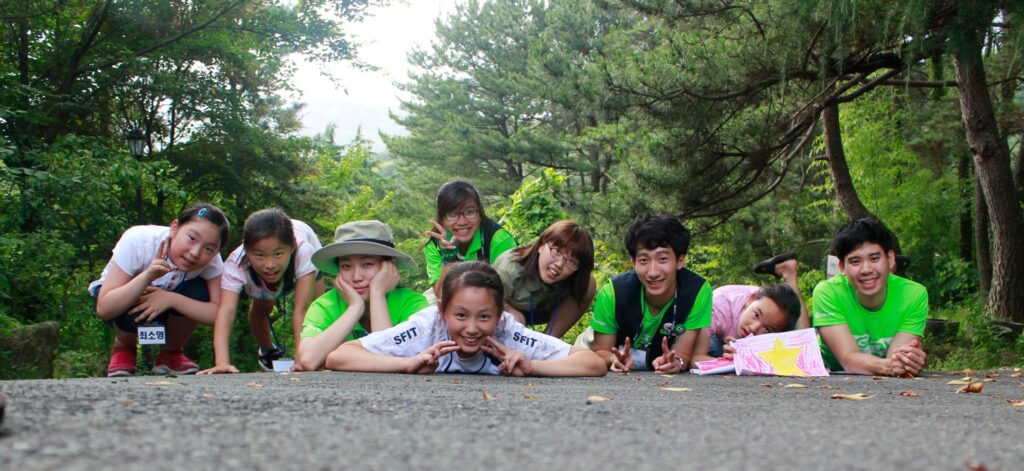
- Restoration and clearance work of some degraded trails and natural heritage;- Vegetation trimming and removal;- Improvement of local fauna, flora, and landscape, including fire prevention actions;- Building nest-boxes for birds, insects and bats;- Cleaning a pond for wildlife;- Control invasive species;- Presentation and discussion of the natural and social reality of the regions of origin of the participants;- Promotion of environmentally and socially responsible attitudes and values;
Accomodation and food
Participants will sleep in sports complex near QEM, on mattresses and with their sleeping bags. There will be 2 shared rooms (separated by gender). There are hot water showers also separated by gender in sports locker rooms.Participants have to bring their own towels and hygiene products, sleeping bag or sheetsblanket, and pillow. The organization will provide breakfasts, lunches and dinners. Lunches and dinners are prepared/cooked served at a canteen from Santa Casa da MisericErdias social complex, but some lunches will be served in the field (sandwiches, fruits, etc.), as well as mid-morning and mid-afternoon snacks. There will be a vegetarian option.
Location and leisure
The camp will take place at the Quinta EcolEgica da Moita (QEM), a 14 hectares forest that locates at the village of Oliveirinha, in a rural setting near the city of Aveiro, here: https://maps.app.goo.gl/FP1VUruHVgReL2Fm9 QEM used to be a very active educational forest but it has been abandoned for a few years and needs restoration and maintenance work to become visitable and a pedagogical forest again.
Project hosted by
General objectives:- Improvement of the visiting and safety conditions at Quinta EcolEgica da Moita - QEM (https://www.quintaecologicadamoita.org/version-un), a 14 hectares oak forest that has been abandoned for about 6 years;- Valorization and promotion of natural and cultural heritage (namely, walking trails and green areas);- Promotion of sustainability, environmental awareness, and biodiversity protection;- Promotion of intercultural relationships, good environmental practices, and citizenship;- Promotion of specific skills in the field of cultural and natural heritage protection.Specific objectives: - Maintenance and clearance of walking trails;- Removal of invasive species and prevention of forest fires by controlling shrubs and invasive vegetation;- Maintenance and recovery of a wildlife pond;- Installation of shelters for wildlife;- Recovery of traditional walls and fountains;- Improvement and protection of biodiversity and ecosystem services;- Valorization of natural and cultural heritage through participation in leisure activities and workshops.
Directions to meeting point
Travelling from Porto by bus or trainThere are direct buses from the Porto (Oporto) airport to Aveiro. If you cant find a direct bus: just outside the airport take the metro (subway http://en.metrodoporto.pt/) to Porto ( CampanhEpound main station (30min). At CampanhEpound, take a train or bus to Aveiro. Local trains are cheaper, but you need to buy the ticket at the counter. Faster trains (InterCidades or Alfa Pendular) are more expensive but can be booked online (www.cp.pt). Travelling from Lisbon Airport by bus or trainJust outside the airport take the metro (subway http://www.metrolisboa.pt/eng/) to Oriente main station (10 min). At Oriente, there are trains and buses to Aveiro. There are Express Buses directly to Aveiro (about 3h; check Rede Expressos or FlixBus). Alternative: at Oriente main station take a train to Aveiro (fast trains are 2h). From Lisbon we recommend faster trains (InterCidades or Alfa Pendular) that can be booked online (www.cp.pt).