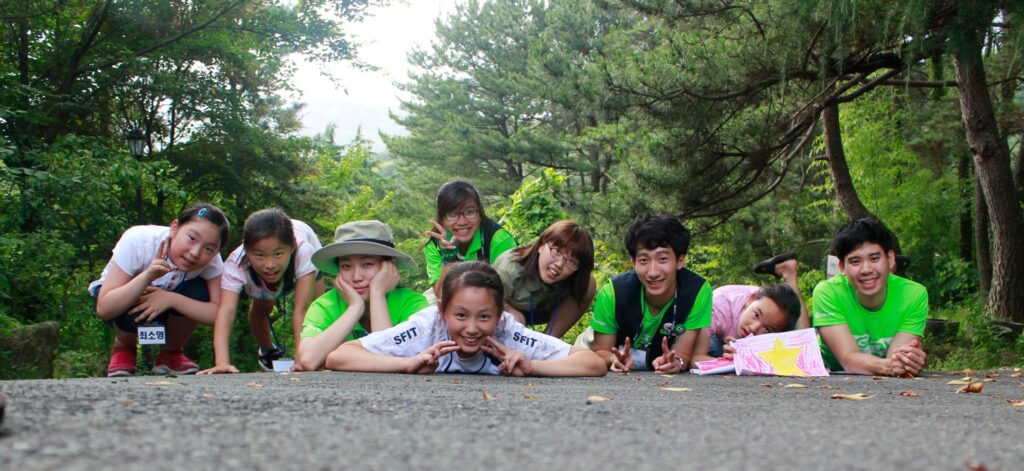
The voluntary working program is diverse. It includes building wooden fence, cleaning hiking, cross-country skiing and snowboarding trails from brushwood, repainting hiking route signs, making firewood (cut woods, pile firewood in ricks), preparing material for rug weaving, cleaning sheep wool for crafts and possibly making woolen carpets.There might be also some light maintaining work in the houses. The highlight of the project is preparation work and assisting in running Haanja ski marathon, which is an annual event, attracting a lot of people from all over Estonia.Depending on weather conditions work will be indoors or outdoors. The work will be around 4-6 hours a day, the rest of the time will be spend to get acquainted with the area, its natural and historical sites as well as with local people. Local people will join the camp for work and leisure. Type of work and its schedule may change due on weather conditions and actual needs of the hosting project. A typical day looks like follows: 9.00 - breakfast 10.00 - work 13.00 - lunch 14.00 - work 16.00 i trips in the area, visits, meetings 19.00 - dinner 20.00 i sauna or evening trips in the area
Accomodation and food
At Kiidi Farm you will share 2-4-bedded rooms. Sleeping bag is NOT needed. WC, shower, hot water, sauna are available. Hosts will prepare meals themselves, however, participants will be asked to help out in the kitchen.
Location and leisure
Kiidi Farm is situated 15 km south of Voru, capital of the County, which has a population of 17 000 people and lies about 250 km south-east of Tallinn, very close to the Latvian border. The closest village to Kiidi Farm is Rouge (3km) with a population of less than 1000 people. More information about Estonia www.visitestonia.com; South-Estonia www.visitvoru.ee, www.werro.ee Study theme and cultural/ social activities In addition to manual work there will be many learning opportunities. In this camp you will have a chance to learn about Estonian traditions, culture and handicrafts. There will be a possibility of studying some local handicrafts techniques (wood, wool,) and try to make your own. Among activities i planned and optional - there are: - Meeting with Rouge Youth Club http://noorteklubi.ee/ - Visiting Rouge school http://www.rouge.edu.ee/ - Visiting local community and town of Voru http://www.voru.ee/index.php?Menu=228Lang=rus - Visiting local sights (Suur Munamagi i highest point of the Baltics) http://www.suurmunamagi.ee/ - Vastseliina castle ruins http://www.vastseliina.ee/linnus/index.php?lang=et - Visiting most spectacular natural sites of the area http://www.visitestonia.com/en/hiking-trail-in-the-rouge-primeval-valley?site_preference=normal ; http://www.visitestonia.com/en/piusa-river-ancient-valley-landscape-reserve?site_preference=normalsite_preference=normal ; http://www.visitestonia.com/en/hinni-canyon?site_preference=normalsite_preference=normal - Trip to Setomaa http://www.setomaa.ee/ru ; http://www.visitsetomaa.ee/ru - Learning local folk danses https://www.youtube.com/watch?v=5BKoS9CfQPAlist=PLmy1EWSYllYn1LB8-Pwq5u2TqQKnJgJiVindex=1 - Short trip to town Aluksne http://www.aluksne.lv/rus03_01.php which is across Latvian border
Project hosted by
The charm of Haanja Uplands in South Estonia lies in its lovely hilly landscape, winding roads and numerous lakes. Most of its ancient villages, peculiar dialect, handicrafts and customs have been preserved until today. The whole area, called Vorumaa, is an area of outstanding beauty. It is famous for its diverse and very well preserved nature. Untouched forests with rich wildlife, deep valleys and picturesque hills, 170 small lakes with extremely clean water, streams and fast rivers with sand caves in their steep banks - you can find everything there. With the support of the state and local authorities the eco- and farm sustainable tourism has been developed in this area. Besides promoting the environmental tourism, this initiative supports rural development which is very important issue for Estonia. Association of Farm Tourism launched several projects and Kiidi Farm, where the camp takes place, is one of them. This is one of the oldest EstYES local partners, who had hosted more than 40 camps and group projects with EstYES for the last 25 years. More information on Kiidi Farm is on site www.kiidi.ee
Directions to meeting point
Terminal: Airport, harbour, bus or train station in Tallinn; public bus to Voru; minivan transfer to Kiidi Farm. You have to arrive at Tallinn airport by 18:00 on 2nd of March at latest. The meeting point on 2nd of March is either at 18:15 by the Infodesk at Tallinn bus station (Bussijaam, Lastekodu str 46) or at 18:30 at the Airport exit gallery which leads to the airport bus stop. This is to ensure that all participants will take the same bus leaving from Tallinn bus station at 18:30 and from the airport at 18:35, arriving at Voru at 22:05. In Voru the host will pick you up by minivan and take to Kiidi Farm. If you take the bus from the airport please buy your ticket in advance here www.tpilet.ee or at www.luxexpress.ee In this case bus driver knows about passengers waiting for the bus in the airport. Please note ticket price reduction of 26 for young people under 26. Do not forget to indicate this when buying your ticket. On the departure day 9th of March you can take a bus leaving Voru at 7:15 arriving at the airport at 10:50.NB The bus schedule will be specified in February.